

What Is A Two-Phase Prop Firm Challenge?
Most two-phase prop firm challenges follow the same basic blueprint. They all require you to pass two evaluation phases before receiving simulated funds. Where they differ is in the details: profit targets vary from firm to firm, maximum daily loss thresholds change, overall loss limits differ, evaluation periods last different lengths of time, some charge refundable fees while others don’t, and leverage ratios span a wide range.
In this post, you’ll learn exactly what a two-phase prop firm challenge is, how the evaluation process works from Phase 1 through Phase 2, what specific targets and rules you must follow, and how to get started with your first challenge at FundingRock.
TLDR:
Two-phase prop firm challenges are evaluation tests where you trade simulated accounts to prove you can make consistent profits while managing risk.
All you have to do is pass two phases with different profit targets (typically 8% in Phase 1, 5% in Phase 2), stay within strict daily and total loss limits, and trade for a minimum number of days.
Pass both phases and you get simulated funds where you keep most profits. The two-phase structure filters out luck and gambling, rewarding only disciplined trading before any real money gets deployed.
What Is A Two-Phase Prop Firm Challenge?
A two-phase prop firm challenge is a two-step evaluation used by proprietary trading firms to decide whether a trader can receive simulated funds. Traders trade on simulated accounts under strict rules on profit targets and drawdowns. The firm absorbs risk only after both phases are passed.
Phase 1 sets a higher profit target and tests basic risk management. Phase 2 has a lower profit target and checks consistency over time. Breaking drawdown rules in either phase ends the challenge.
The two-phase structure filters traders and aligns risk between trader and firm. It builds discipline while proving that results are repeatable before simulated funds is provided.
How Two-Phase Evaluations Work
Most two-phase prop firm evaluations work in very similar ways. The main differences usually relate to the profit target, maximum daily loss, maximum overall loss, how long the evaluation lasts, whether the fee is refundable, and the leverage offered.
In a typical two phase model, traders start on a demo account and must reach a profit target while staying within risk limits. Passing phase one unlocks a second phase with another profit target under similar rules, and completing both phases leads to a funded account where traders keep most of the profits.
Below, we share how our FundingRock challenges work as an example.
Phase 1:
Phase 1 challenge is a simulated trading test where you must prove you can make profit while respecting strict risk limits. You are judged on both profitability and risk control, not just how fast you make money.
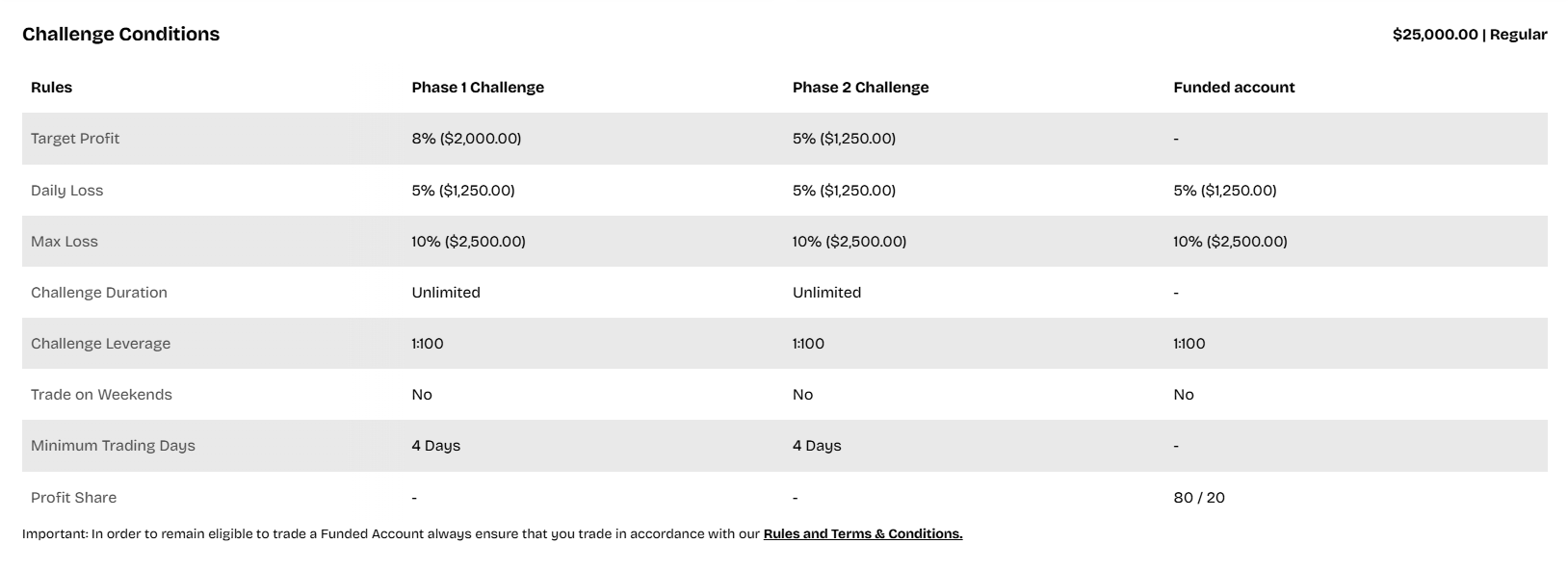
You need to hit a profit target of 8% of your starting balance. You must trade on at least 4 separate days. Your total loss can’t exceed 10% of the account, and your loss on any single day can’t exceed 5%.
Example using a 25,000 account. The profit target is 2,000. The maximum total loss is 2,500. The maximum daily loss is 1,250. You reach Phase 1 by making 2,000 in profit across at least 4 days without ever breaking those loss limits.
Phase 2:
A Phase 2 challenge is a verification step. You repeat similar trading behavior from Phase 1, but with stricter confirmation that your results were consistent and not just luck.
To pass Phase 2, you must hit a 5% profit target based on your starting balance. You must trade for at least 4 separate days unless you purchased the No Minimum Trading Days add-on. You must also stay inside risk limits, keeping losses under 5% per day and under 10% total.
If you meet all three conditions, you receive your funded account within 12 to 24 hours and become eligible for real rewards.
Coming back to the example using a 25,000 account. The profit target is 1,250, which is 5% of the balance. The maximum daily loss is also 1,250, which equals 5%. The total maximum loss is 2,500, which equals 10%. You must trade on at least 4 different days while staying inside these limits.
Are You Interested In Starting A Two-Phase Challenge?
Getting started with FundingRock is simple. The process is designed to let you demonstrate your trading skills before receiving a funded account.
Here’s how to get started with FundingRock in five simple steps:
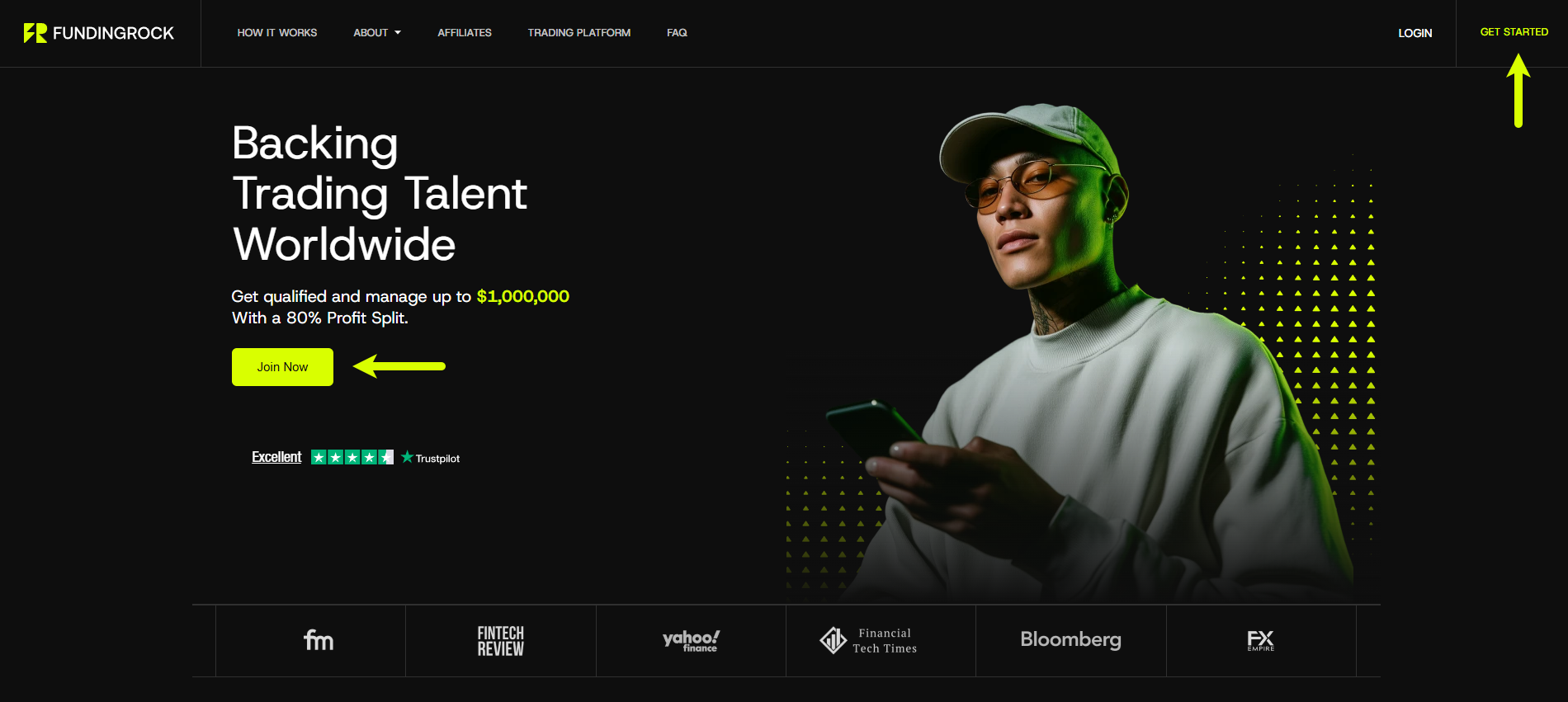
- Create your FundingRock account by clicking the “Join Now” or “Get started” button on the homepage. Provide basic information and choose a username and password to complete your registration.
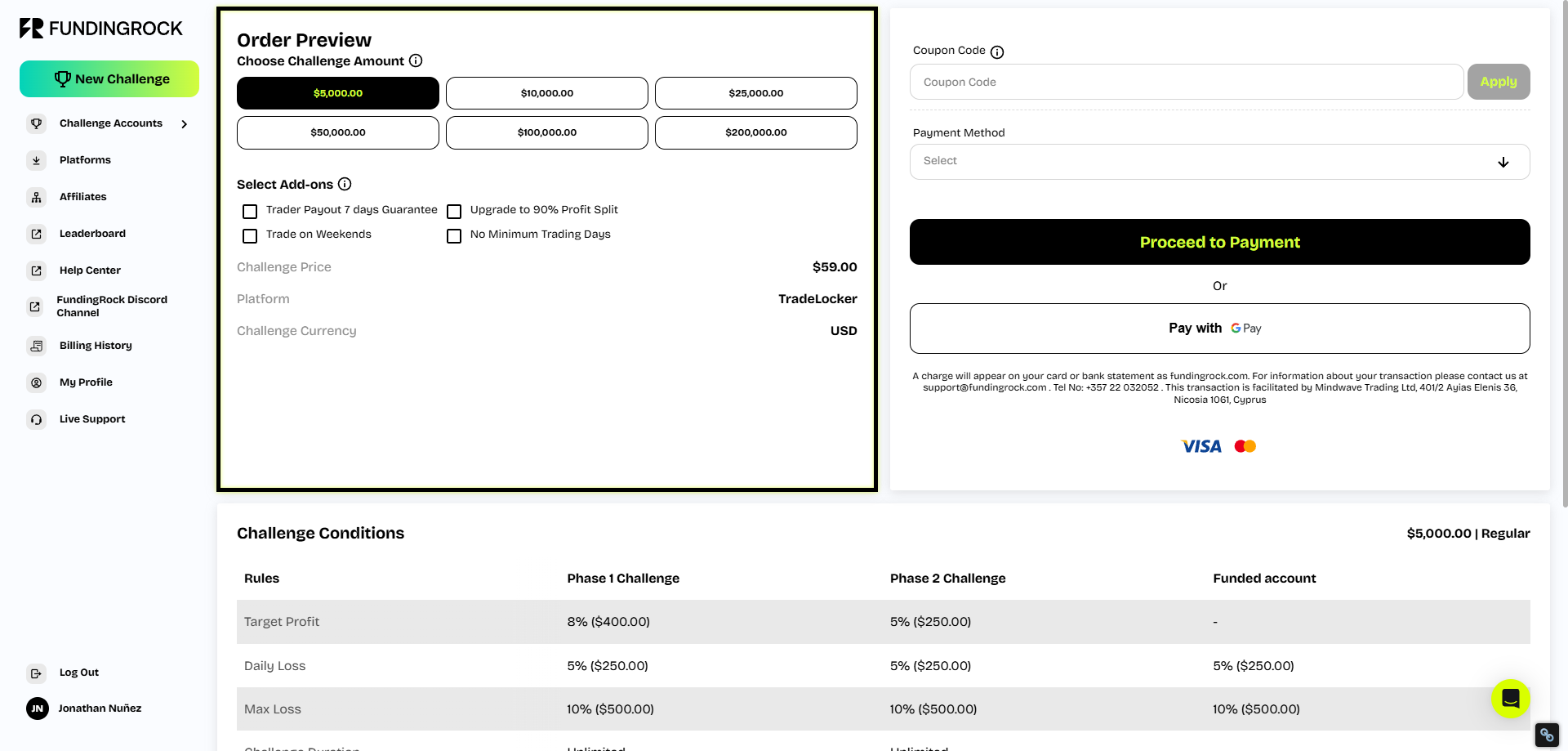
- Select a challenge that fits your trading style. Each challenge has different profit targets and risk limits.
- Trade your account while following all risk rules. Reach the required profit target to pass this phase.
- Successfully passing both challenge phases earns you a funded trading account from FundingRock.
- Request a reward every 14 days. FundingRock processes your withdrawal after submission.
Help is available if you need it. The support team can assist through live chat, phone, or Emails.
Conclusion
Two-phase prop firm challenges are the industry standard for one simple reason: they work. They separate disciplined traders from gamblers by requiring consistent profits across two distinct phases while enforcing strict risk management at every step.
This structure protects both the firm’s simulated funds and your development as a trader. You can’t luck your way through 8% profit in Phase 1 and another 5% in Phase 2 while respecting daily and total loss limits across multiple trading days.
However, the path forward is straightforward. All you have to do is choose your challenge size, pass Phase 1 by hitting your profit target with controlled risk, repeat the process in Phase 2 with tighter verification, and claim your funded account.
FundingRock processes successful traders into funded status within 12 to 24 hours after Phase 2 completion, with rewards available every 14 days.
The two-phase challenges prove your skill under real conditions before simulated funds gets deployed. Start your evaluation today and demonstrate what you can do when discipline meets opportunity.